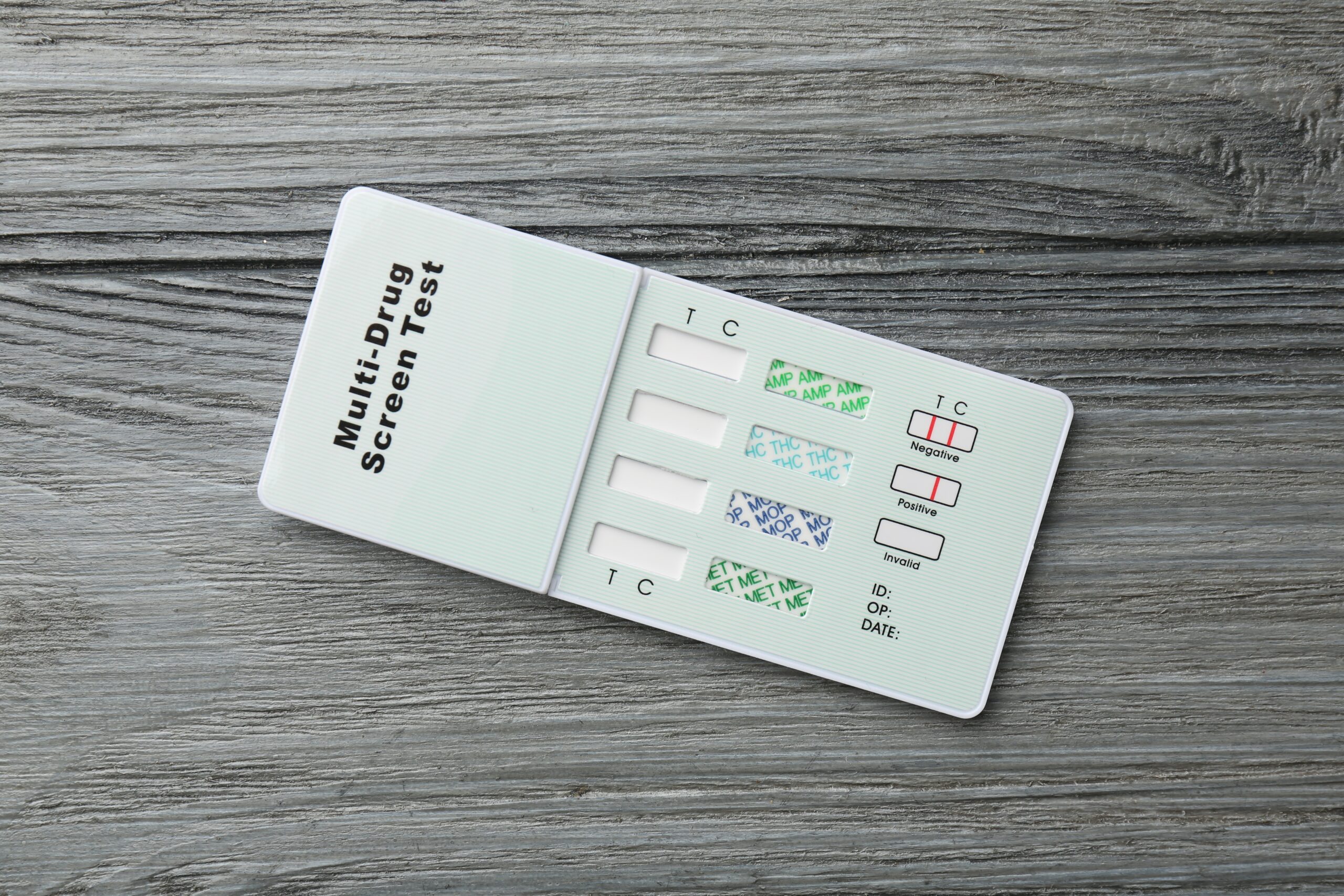
The U.S. Food and Drug Administration (FDA) has published a final order expanding 510(k) exemptions for certain Class II clinical toxicology test systems (91 FR 63478, Docket No. FDA-2026-N-4268), effective on publication on 6 October 2026. The order removes the exclusion of devices intended for Federal drug testing programs from the existing exemptions for 14 drugs-of-abuse test system types under 21 CFR Part 862, including amphetamine, cannabinoid, cocaine, and opiate (including fentanyl) test systems. Qualifying test systems intended for employment and insurance testing may now be marketed for use in Federal programs, such as those run by SAMHSA, the Department of Transportation (DOT), and the U.S. military, without 510(k) clearance. For IVD manufacturers in the workplace drug testing market, this removes the premarket step that has stood between an exempt employment-testing product and federally regulated testing.
Overview
Under section 510(m) of the Federal Food, Drug, and Cosmetic Act (FD&C Act), as amended by section 3054 of the 21st Century Cures Act, FDA may exempt a Class II device from premarket notification when it determines a 510(k) is not necessary to assure safety and effectiveness. FDA’s Class I and Class II Device Exemptions page summarizes how these exemptions work and the general limitations that apply to them.
The test systems covered by this order were first partially exempted in 2017 (82 FR 31976, 11 July 2017), with the codified language amended on 30 December 2019 (84 FR 71794). That exemption applied only to test systems intended for employment and insurance testing and labeled solely for that use, and it expressly excluded devices intended for Federal drug testing programs. Manufacturers targeting those programs therefore still needed 510(k) clearance.
On 1 May 2026, FDA published a notice of intent to remove the Federal drug testing exclusion (91 FR 23427), with comments due by 30 June 2026. Approximately 70 commenters responded, including manufacturers, trade organizations, labor unions, and individuals. FDA has now finalized the proposal without modification, acting on its own initiative under section 510(m)(2). The list of device types is unchanged from the May 2026 notice.
Key Points
- The Federal drug testing exclusion is removed. For the 14 device types listed below, the exemption now covers test systems intended for use in Federal drug testing programs. FDA has revised paragraph (b) of each classification regulation accordingly.
- The exemption is effective immediately. The order took effect on publication on 6 October 2026. There is no transition period, and none is needed, since no previously marketed device loses its status.
- The employment and insurance limitation remains. The exemption applies only where the test system is intended for employment and insurance testing and its labeling states it is intended solely for that use. Any other intended use, such as clinical diagnosis, still requires a 510(k). FDA declined to prescribe specific wording for the labeling statement.
- General limitations under 21 CFR 862.9 still apply. A 510(k) is still required if the device has an intended use different from legally marketed devices of its generic type, or operates on a different fundamental scientific technology. FDA recommends a section 513(g) request where a manufacturer is unsure whether a specific test system qualifies.
- Fentanyl test systems are included. FDA confirmed that fentanyl tests fall under the opiate test system regulation (21 CFR 862.3650). Devices previously under non-exempt product code DJG move to exempt product code PVH if they meet the limitations.
- Product codes are shifting. Newly exempt devices move from their non-exempt product code to the corresponding exempt code. FDA will also update each exempt code’s definition to reference the new order.
- What does not change. Classification remains Class II (special controls). Establishment registration and device listing (21 CFR Part 807), labeling (Parts 801 and 809), quality management system (Part 820), and medical device reporting (Part 803) requirements all continue to apply. Previously cleared devices may continue to be used in Federal programs.
- What is not exempted. FDA declined requests to extend the exemption to phencyclidine (PCP) test systems, oral fluid collection devices, or all test systems used in Federal programs. It also declined to adopt enforcement discretion for labeling or for non-exempt devices.
Device Types Covered
The expanded exemption applies to the following generic device types, as listed in Table 1 of the final order.
| 21 CFR section | Device type | Exempt product code | Non-exempt product codes |
| 862.3100 | Amphetamine test system | PUX | DIT, DJL, DJP, DKZ, DNI, DOD, DPJ, NFT, NVI, OIW |
| 862.3150 | Barbiturate test system | PUY | DIS, DJN, DKN, DKX, DLX, DMF, KZY, PTH |
| 862.3170 | Benzodiazepine test system | PUZ | JXM, KZZ, LAA, LAB, NFV |
| 862.3250 | Cocaine and cocaine metabolite test system | PVA | DIN, DIO, DIR, DLN, DMN, DNG, DOM, JXO, KLN, LAC, NFY |
| 862.3270 | Codeine test system | PVB | DLD, LAD, LAE |
| 862.3580 | Lysergic acid diethylamide (LSD) test system | PVC | DLB, DOL |
| 862.3610 | Methamphetamine test system | PVD | DJC, LAF, LAG, NGG |
| 862.3620 | Methadone test system | PVE | DIW, DJR, DKR, DMB, DNT, DPP, PTG |
| 862.3630 | Methaqualone test system | PVF | KXS |
| 862.3640 | Morphine test system | PVG | DIQ, DJJ, DLR, DMY, DNA, DNK, DOE, DOK, DPK, NGI |
| 862.3650 | Opiate test system (including fentanyl) | PVH | DJF, DJG, DKT, DLT, LAH, LAI, NGL |
| 862.3700 | Propoxyphene test system | PVI | DPN, JXN, LAJ, LAK, QBF |
| 862.3870 | Cannabinoid test system | PVJ | DKE, LAT, LDJ, NFW |
| 862.3910 | Tricyclic antidepressant drugs test system | PVK | LFG, LFH, LFI, MLK, QAW |
Expert Insights and Broader Implications
The practical work for most manufacturers sits in labeling, not submissions. Under the previous exemption, many employment-testing products were labeled as not intended for Federal drug testing programs. Commenters asked FDA to tolerate that labeling while products moved into Federal use, and FDA declined. A manufacturer that now intends its exempt device for Federal programs should revise its labeling under design change control so that the labeling accurately reflects that intended use and is not false or misleading under 21 CFR Parts 801 and 809.
A 510(k) exemption is not the same as program acceptance. FDA was explicit that it does not oversee Federal drug testing programs and does not decide whether oral fluid or hair testing may be used in them, even though many commenters linked this order to those matrices. Use in Federal programs remains governed by SAMHSA’s Mandatory Guidelines for urine and oral fluid, the National Laboratory Certification Program, and DOT requirements. The exemption boundaries also deserve caution: FDA declined to confirm that a new analyte, methodology, or cutoff automatically falls within an exempt generic type, and the 21 CFR 862.9 limitations will decide those cases.
This is a US-specific determination. Exemption status under the FD&C Act has no bearing on conformity assessment under the EU IVDR, the UK Medical Devices Regulations 2002, Swiss IvDO, or other frameworks. Manufacturers selling the same assays internationally should assess intended purpose and classification separately in each market, including whether non-medical workplace testing falls within the scope of IVD regulation there.
What This Means for Manufacturers
Manufacturers of drugs-of-abuse test systems for workplace testing should:
- Map your portfolio to the 14 device types. Confirm which test systems fall under the listed classification regulations and whether each analyte sits within the generic device type.
- Test each product against 21 CFR 862.9. Check intended use and fundamental scientific technology against legally marketed devices of the same type. Where the answer is unclear, consider a section 513(g) request before relying on the exemption.
- Review your labeling. Confirm that the “intended solely for employment and insurance testing” statement is present. If you intend Federal program use, revise any exclusion statements under design change control.
- Check your registration and listing. Make sure newly exempt devices are listed under the correct exempt product code in FDA’s establishment registration and device listing system.
- Reassess pending submissions. If a 510(k) is under review for a device that now qualifies for the exemption, consider discussing next steps with FDA.
- Confirm program requirements separately. Review SAMHSA, NLCP, and DOT requirements for the matrices and analytes you intend to support, since FDA exemption does not confer program acceptance.
- Keep post-market systems in place. Complaint handling, medical device reporting, and quality management system obligations are unchanged for exempt devices.
- Document the rationale. Record your exemption assessment in the design history or technical file as evidence of a controlled regulatory decision.
Learn More / How MedEnvoy Can Support
MedEnvoy tracks FDA classification and premarket developments as part of its regulatory intelligence service. We are sharing this update because it changes the market access route for a defined group of IVDs, and because the labeling and listing steps that follow sit squarely within ongoing US compliance obligations.
MedEnvoy can support exemption assessments against 21 CFR 862.9, preparation of section 513(g) requests, labeling reviews, establishment registration and device listing updates, US Agent representation, and post-market compliance support. To discuss how this order affects your drugs-of-abuse test systems, speak to one of our experts.
Related Guidance
We share our expertise because we believe in removing barriers to global commercialization.

Webinar | IVDD to IVDR: Mind the Gap Before You Apply
DNV and MedEnvoy present a one-hour webinar on 9 December 2026 on the IVDD to IVDR transition for Class B and Class A sterile IVD manufacturers preparing for the 2027 milestones.

How Much Does It Cost to Register a Medical Device with the FDA in 2027?
FDA fees for medical device registration depend on classification. The FY 2027 annual establishment registration fee is $13,785, plus pathway fees for 510(k), De Novo, and PMA submissions.

AI at RAPS 2026: Where Regulators and Industry Agree. Recap with Rocio Fallas
AI was among the most discussed topics at RAPS Convergence 2026. Rocio Fallas shares her impression of where regulators and industry agree, and what manufacturers should prepare for in 2027.