When seeking FDA approval to sell your medical device in the US market, the classification of your device is the foundation of everything. Your device’s class sets the stage for which regulatory pathway you must take to seek FDA approval, and the set of regulations that determine how you can sell and market your device.
At MedEnvoy Global, we can help you navigate the FDA classification system with ease and strengthen the chances of an approval. Our regulatory specialists have assisted with over 10,000 medical devices, and we understand the criteria used by the FDA to classify a medical device. We can help you by:
- Developing a tailored regulatory strategy to ensure the appropriate pathway for your device
- Facilitating early collaboration with the FDA to identify potential roadblocks and produce clear objectives
- Reviewing and compiling documentation to make sure it meets necessary standards
- Implementing and improving systems within your organization to adhere to FDA standards
- Advising on best practices for designing and conducting clinical trials
- Providing ongoing support that extends beyond FDA approval so you maintain compliance throughout the product life cycle
We’d be happy to answer any questions you have during a discovery call. Contact our regulatory specialists today to schedule yours.
Classification: The Foundation of Everything
When seeking FDA approval for a medical device, one of the earliest steps is determining the classification of your device. This classification indicates how risky your device is to a patient or user. Essentially, what would happen if the device failed or malfunctioned? How much harm would that cause the patient or consumer? The severity of that potential outcome is ranked into three tiers of increasing risk:
Class I (Lowest Risk)
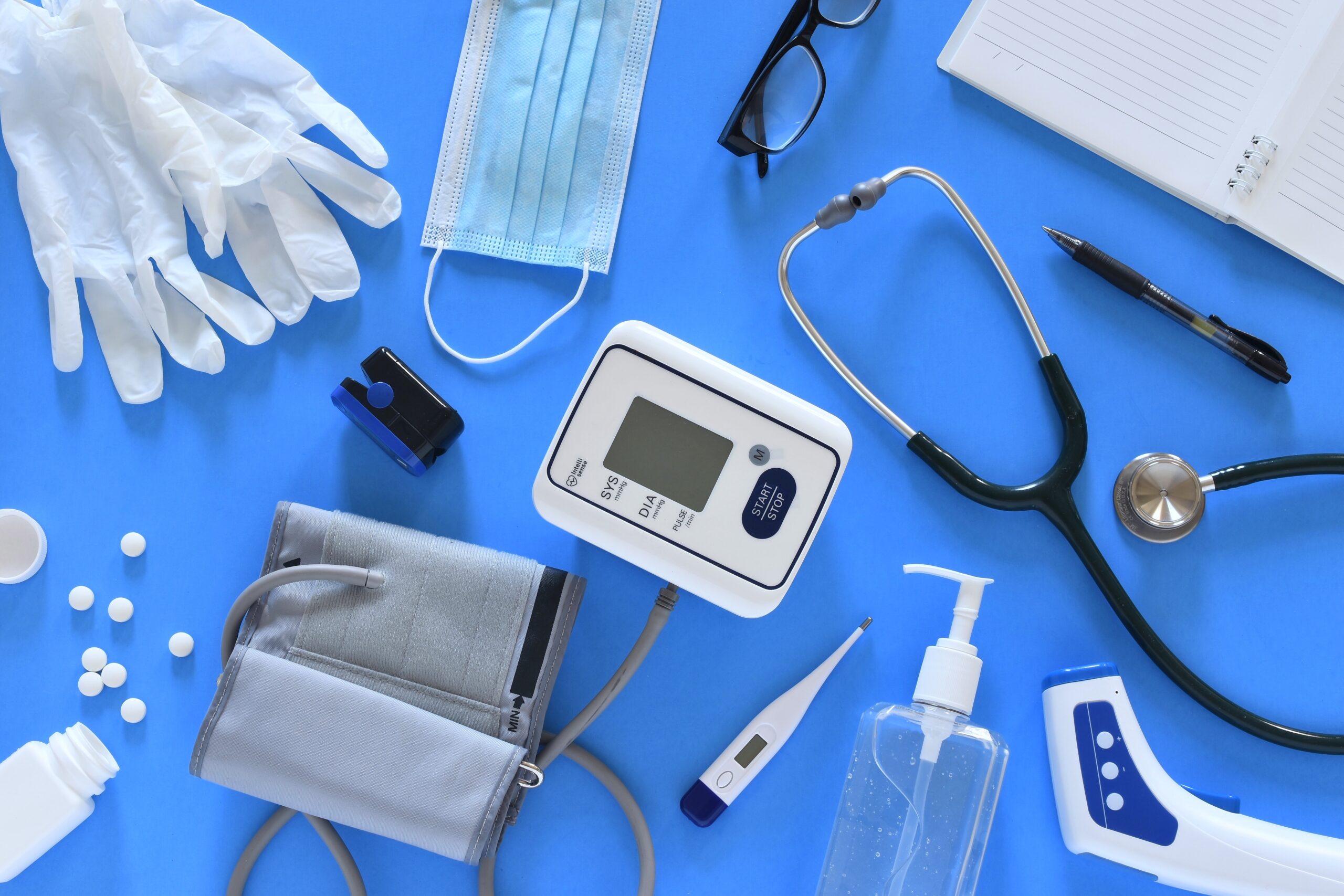
Class I devices have minimal potential for harm. Some examples include bandages, tongue depressors, bedpans, stethoscopes, and surgical masks. Many (but not all) Class I devices are exempt from premarket submission, which means they do not require FDA authorization to be sold or distributed. However, they are still subject to general controls. You can confirm if your low-risk device is 510(k) exempt by searching the Medical Device Exemptions Database by device type.
Class II (Moderate Risk)
Class II devices could cause moderate injury to a patient or user when they fail. Some examples of Class II devices include infusion pumps, blood pressure monitors, pregnancy tests, surgical drapes, powered wheelchairs, and catheters. Almost all Class II devices require a 510(k) submission to the FDA. They require general and special controls, which include expanded labeling requirements, mandatory performance standards, and post-market surveillance. Note: About 20% of well-established Class II devices are 510(k) exempt (e.g., digital handheld thermometers).
Class III (Highest Risk)
This class includes devices that are life-sustaining, life-supporting, implanted, or present a significant risk of illness or injury. Pacemakers, defibrillators, cardiovascular stents, heart valves, breast implants, cochlear implants, and intraocular lenses all fall under Class III. Some diagnostic software could also fall under Class III if a misdiagnosis could pose a risk to the patient’s life or overall health. These require a Premarket Approval (PMA), which is a rigorous submission and review process, and compliance with general controls.
No matter your device’s classification, our regulatory experts can answer any questions you have about the implications of each class and how to ensure compliance with FDA standards. At MedEnvoy, we can help you get to market faster by working directly with the FDA and providing end-to-end support throughout the submission process.
Finding Your Device Classification
Most device regulators use a rules-based system to determine device classification. The FDA’s system is more like a scavenger hunt. There are several ways to confirm your device classification, including:
- Finding your FDA product code: The product code is a three-character identifier for a family of generic devices legally distributed in the US. Each product code has an associated regulation number in the CFR, device class, and submission type requirement: 510(k) exempt, 510(k), or PMA, etc. You can search your device name in the FDA Product Classification Database to find your product code.
- Searching the Code of Federal Regulations: All registered, cleared, or approved medical devices are assigned to a medical specialty panel (e.g., cardiovascular), which corresponds to a specific subpart in the Code of Federal Regulations. You can search by specialty panel and subpart of the CFR (Parts 862 to 892) to find your device and classification. The electronic CFR (eCFR) is found here.
- Search for a similar device legally marketed in the US: You may elect to determine your device classification by searching FDA’s database Establishment Registration and Device Listing Database for devices similar to your device.
Identifying a Predicate Device
If there is already a device on the market similar to yours, aka a “predicate device”, you can use that to determine your device’s classification
Find Your Substantially Equivalent Predicate Device
If your device requires a 510(k), you must identify a predicate device. A predicate is a device already cleared by the FDA that is substantially equivalent (SE) to your device. To find your predicate, you will search the FDA 510(k) Database for cleared devices with the same product code and characteristics as your device.
Your device and its predicate do not need to be identical, but they must have the same:
● intended use, and
● technological characteristics.
The objective of your 510(k) is to demonstrate your device’s substantial equivalence to the predicate. If your predicate device has the same intended use but different technological characteristics, you must present performance data in your 510(k) that proves your device is just as safe as the predicate despite these differences. Different materials are a common example of this: two devices that achieve the same clinical outcome but are made from different or contain different plastics, metals, or other materials. In this case, your 510(k) might need biocompatibility, sterility method testing, or other test data that proves the material does not introduce an unacceptable risk to the patient.
MedEnvoy Global can identify a predicate device to help streamline the approval process and ensure regulatory compliance.
What if Your Device Has No Predicate or Product Code?
If you can’t find a predicate device or product code that matches your device, it might be considered a novel device, which really means it is not substantially equivalent to any device legally sold on the US market. Novel devices are not eligible for the 510(k) pathway. However, any time there is ambiguity or uncertainty about your device classification, the best submission route, or predicate device, it’s worthwhile to engage with the FDA.
The FDA has several types of pre-submission meetings with different processes and outcomes:
● Pre-Submission (Q-sub) meetings allow you to get direct feedback from FDA reviewers on your regulatory strategy, clinical data, testing requirements, and more before compiling your premarket submission. There is no fee for this meeting type.
● A 513(g) Request for Classification is a more formal process with a fee. This option results in a non-binding classification determination from FDA.
Manufacturers with complex, high-risk, or novel devices often use both meeting types to make sure they are following the correct regulatory pathway and that their submission package aligns with FDA expectations.
MedEnvoy Global routinely helps manufacturers file De Novo classification requests for novel devices, providing comprehensive support throughout the process.
When is The Medical Device’s Class Determined?
This is determined in the early product development phase. Before marketing or commercial distribution occurs, your device’s risk level and intended use must be evaluated to determine the class.
There are two primary methods to accomplish this: the informal method and the formal method.
To informally learn your device’s class, you can email the device determination mailbox (DeviceDetermination@fda.hhs.gov). Include a brief description of the device, intended use, a list or picture of all labeling claims. You should get a response when appropriate within roughly seven days.
To formally determine your device’s classification, you can submit a 513(g) request for information. This will include a cover letter, description of the device, intended use, and labelling claims. This is a much more intensive process, and MedEnvoy can assist with proper document preparation to ensure that all the necessary information is included.
Can I Change My Medical Device’s Classification?
What if you believe an error occurred during the classification process, or the device underwent a change between the last classification and needs to be re-evaluated? Can the device be reclassified?
Possibly. There are pathways to reclassify your device, including:
- Submitting a reclassification petition.
- Submitting a De Novo request for a low-to-moderate risk device that was initially given a Class III designation
The FDA might also reclassify a device if newly discovered information suggests that the device’s risk level requires a change.
A device may be reclassified from Class II to Class III if general and special controls are not sufficient. Alternatively, a Class III may be reclassified to a Class II if general and special controls would be sufficient to provide a reasonable assurance of safety and effectiveness.
MedEnvoy Global can answer any questions you have about a device reclassification and, if necessary, help you handle the required documentation and petition.
Questions? Contact Our Regulatory Specialists Today
We have worked directly with the FDA for decades on thousands of devices, and we are well-equipped to walk you through the device classification process and provide support throughout. We can help identify a predicate device to streamline the approval process, compile and review necessary documentation, communicate with the FDA, guide you through the complexities of clinical data management, and identify all the steps necessary for an FDA clearance.
Schedule a consultation with our FDA approval consultants today to learn more.
Related Guidance
We share our expertise because we believe in removing barriers to global commercialization.

Webinar | IVDD to IVDR: Mind the Gap Before You Apply
DNV and MedEnvoy present a one-hour webinar on 9 December 2026 on the IVDD to IVDR transition for Class B and Class A sterile IVD manufacturers preparing for the 2027 milestones.

How Much Does It Cost to Register a Medical Device with the FDA in 2027?
FDA fees for medical device registration depend on classification. The FY 2027 annual establishment registration fee is $13,785, plus pathway fees for 510(k), De Novo, and PMA submissions.

AI at RAPS 2026: Where Regulators and Industry Agree. Recap with Rocio Fallas
AI was among the most discussed topics at RAPS Convergence 2026. Rocio Fallas shares her impression of where regulators and industry agree, and what manufacturers should prepare for in 2027.