Australia Prostheses List and Implications for Medical Device Manufacturers
Following several years of industry complaints regarding the process for obtaining private health insurance reimbursement authorization for devices and ballooning private health insurance costs in 2021, the Australian government-initiated reforms and improvements to the Australia Prostheses List, targeting completion by 2025. While the success of these reforms can only be assessed over time, under the watchful eye of industry players and their consultation, in this article we provide an outline of the Prostheses List and process for manufacturers to get their devices on the list.
What is the Prostheses List?
The Prostheses List (also referred to as the Prescribed List) is a list of medical devices and benefits that define the minimum amount private health insurers are legally obligated to pay if:
-
-
- The device is on the list.
- A patient with appropriate private health insurance receives the device as part of hospital treatment or hospital substitute treatment.
- A public health (i.e. Medicare) benefit is payable for a service associated with the use of the device.
-
The Prostheses List and Its Regulatory Framework
The Prostheses List is a schedule to the Private Health Insurance (Prostheses) Rules, a legislative instrument made under the Australian Private Health Insurance Act 2007.
With approximately 11,000 billing codes, divided into parts, categories, subcategories, groups, subgroups, and suffixes, the list includes the name, description, and size(s) of each product listed under each billing code and the minimum number of benefits insurers pay for each device.
The list is subjected to updates three times a year in March, July, and November, although there have been changes to the submission process as part of the reform process. For example, the previous Prostheses List Management System (PLMS) was closed on 14 May 2023 and since 11 September 2023, applications must be submitted through the Health Products Portal (HPP).
What Devices are Eligible to be Included on the List?
The Prostheses List is divided into three parts with criteria that must be fulfilled for a product to be included. While Part B covers human tissue and products substantially derived from such tissues, Part A covers the prostheses that satisfy the criteria for listing agreed by the Prostheses Listing Advisory Committee (PLAC).
Part C Inclusions
Part C covers prostheses that also fulfill listing criteria and include:
-
-
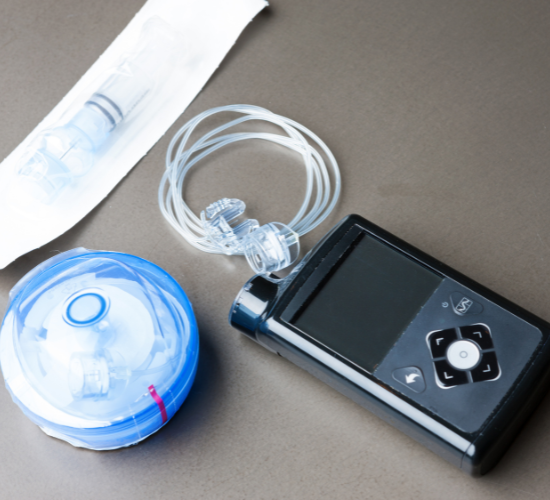
- Insulin infusion pumps
- Implantable cardiac event recorders, cardiac home/remote monitoring systems
-
-
-
- Cardiac ablation catheters
- Mapping catheters or patches for cardiac ablation
- Monopolar or bipolar devices for surgical cardiac ablation
- Systems or probes for surgical cardiac ablation
-
Listing Criteria for Part A
The listing criteria for Part A includes:
1. The product must be on the Australian Register of Therapeutic Goods (ARTG).
2. The product must be provided to a person as part of an episode of hospital treatment or hospital-substitute treatment.
3. A Medicare benefit must be payable in respect of the professional service associated with the provision of the product
4. The prosthesis should fulfill at least one of the following criteria:
-
-
-
- Surgically implanted in the patient and purposely designed in order to:
- Replace an anatomical body part; or
- Combat a pathological process; or
- Modulate a physiological process
- Essential to and specifically designed as an integral single-use aid for implanting a product, described in (a) (i), (ii), or (iii) above, which is only suitable for use with the patient in whom that product in implanted.
- Critical to the continuing function of the surgically implanted product to achieve (i), (ii), or (iii) above and which is only suitable for use by the patient in whom that product is implanted.
- Surgically implanted in the patient and purposely designed in order to:
-
-
5. The product has been compared to alternative products on the Prostheses List or alternative treatments and:
-
-
-
- Assesses as being, at least, of similar clinical effectiveness; and
- The cost of the product is relative to its clinical effectiveness.
-
-
IVD Exclusion and Prostheses List Categories
As is apparent from the above criteria, in vitro diagnostic medical devices (IVDs) are not eligible for inclusion on the Prostheses List. Instead, IVD manufacturers must pursue listing their devices on the Pharmaceutical Benefits Scheme (PBS) if interested in obtaining insurance reimbursement for their devices.
The categories of products in the Prostheses List include the following (with the list of general products being subject to aggressive reforms):
-
-
- Cardiac
- Cardiothoracic
- Hip
- Knee
- Ophthalmic
- Specialist orthopedic
- Spinal
- Urogenital
- Vascular
- Ear, nose, and throat
- Neurosurgical
- Plastic and Reconstructive
- General/miscellaneous products (products not included in other categories)
-
Prostheses List Part D
As part of the reforms, there is a Part D to the Prostheses List, which lists general-use items from Part A that are to be removed from the list on July 1, 2024, as such devices will no longer be eligible for inclusion on the list as part of the reforms.
What is the Process to get a Device on the List?
After inclusion of the device on the ARTG or submission of an application for device inclusion on the ARTG, the Australian Sponsor of the device (or an agent acting on behalf of the Sponsor) must submit an application in the HPP indicating the intended submission pathway from the following options:
-
-
- Tier 1 – Department assessment pathway (only available Part A devices)
- Tier 2 – Clinical Health Technology Assessment (HTA) pathway
- Tier 3 – Full HTA pathway (applicable for novel OR co-dependent applications dependent on a new or changed Medicare Benefit Scheme (MBS) item in which case a previous application to the Medical Services Advisory Committee (MSAC))
-
Required Product Details and Documentation
In addition to application contact details, the applicant will then need to submit the following product details and supporting documentation:
-
-
- Product Name/Description
-
-
-
- Billing code (amendments only)
- Product name
- Description
- Size/Size range
-
-
-
- Regulatory Information
-
-
-
- ARTG ID (if already on the ARTG)
- ARTG Application ID
-
-
-
- Product Information per Catalog #
-
-
-
- Grouping
- Category
- Subcategory
-
-
-
- Group
- Subgroup
- Suffix
- Benefit Amount
-
-
-
- Comparators (including the compilation of evidence of how the comparator differs from the subject product, across all components including description, size, and material)
- MBS Items (The Medicare professional services related to device use; 1-4 services can be listed)
- Supporting Documentation
-
-
-
- Instructions for use
- Product information including a product brochure including references to all catalog #s related to the device
- Surgical technique
-
Review Process and Decision Making
For devices in which the applicant has proposed a new grouping (e.g. novel devices), details of the device use and cost in Canada, France, New Zealand, Singapore, or the UK will need to be provided, as relevant. Furthermore, any evidence to support differences in cost-effectiveness will also need to be submitted.
Applications are subject to fees (and once on the Prostheses List, each billing code is subject to ongoing listing fees), and once submitted, they are reviewed by the PLAC with the support of the relevant Clinical Advisory Group (CAG) and a panel of clinical experts.
The PLAC may make several recommendations, including, but not limited to:
-
-
- Listing on the Prostheses List per the application
- Listing on the Prostheses List with conditions, different group, benefit or suffix
- Further assessment required
- Application deferral
- Against listing on the Prostheses List
-
The governmental Minister then considers the applications, PLAC recommendations and other relevant information and determines whether the application is approved or rejected. Upon approval, the device is then included in the next round of updates to the Prostheses List.
Changes to Benefits
Manufacturers need to remember that one of the primary aims of the reforms being undertaken by the Australian government is a reduction in ballooning benefit costs. To meet this aim, devices on the Prostheses List will have their benefit levels reference priced by establishing the gap between the prices paid in the public hospital system via the Medicare system and the Prostheses List. While Cardiac Implantable Electronic Devices are deferred from benefit reductions, sequential reductions have been taking place (and continue to take place) with the planned reductions being:
-
-
- 40% reduction of the gap on July 1, 2022
- 20% reduction of the gap on July 1, 2023
- A final 20% reduction of the gap on July 1, 2024
-
A ‘floor’ in the gap of 7% has been established and devices with a benefit having an existing gap less than 7% above the weighted public price are not subject to reduction.
Learn More About Australia Prostheses List with MedEnvoy
This article provides an overview of Prostheses List applications in Australia, and it should be noted that due to the active status of the reforms currently being developed and enacted requirements for device inclusion on the Prostheses List and applications may change, however, if you have any questions regarding Australian medical device regulatory requirements, or require an Australian Sponsor, get in touch.
Related resources:



Related Guidance
We share our expertise because we believe in removing barriers to global commercialization.

COFEPRIS Finalizes Medical Device Labeling Standard
On May 19, COFEPRIS published an updated medical device labeling standard, NOM-137-SSA1-2025, in the official Diario Oficial de la Federación (DOF). The update replaces…

Swissmedic Launches 2026 PMS Focus Campaign for Higher-Risk Medical Devices
Swissmedic has issued a formal information letter announcing that it will conduct a focus campaign in 2026 reviewing…

TGA Clarifies Exclusion for Digital Mental Health Software
The Australian Therapeutic Goods Administration (TGA) published guidance on 16 March 2026 clarifying when software products intended…