
As your Global Partner for Medical Device Regulatory Compliance, MedEnvoy would like to notify manufacturers that the International Organization for Standardization (ISO) has released an amendment to the ISO 15223-1:2021 standard, specifically Amendment 1:2025. This update is significant for the medical device manufacturers, as it pertains to the symbols used with information supplied by the manufacturer. The amendment primarily focuses on the symbol for the authorized representative and its application across different regions.
ISO 15223-1:2021/Amd 1:2025
Key Updates:
Addition of Defined Term for Authorized Representative
The amendment introduces a clearly defined term for the “authorized representative” in the context of medical device labeling. This change aims to enhance clarity and ensure a consistent understanding across different regions and stakeholders.
Modification of Authorized Representative Symbol
The amendment introduces a change in the symbol representing the “European Community Representative” from “EC REP” to “EU REP”. The updated symbol is no longer specific to any country or region, allowing for broader international application and compliance. This change is crucial for manufacturers and authorized representatives who operate in multiple jurisdictions, as it simplifies the labeling process and reduces the need for region-specific symbols.
Use of Country Codes
The amendment specifies that the [XX] text in the authorized representative symbol should be replaced by a two-letter (e.g., CH for Switzerland) or three-letter (e.g., NZL for New Zealand) country code, as recognized by the jurisdiction of the country. This change is intended to make the symbol more universally applicable and reduce regional specificity.
For European Authorized Representative:

For Switzerland Representative:
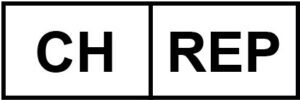
*It is important to note that the guidance specifically states: “not all authorities having jurisdiction recognize the two-letter or three letter country codes found in ISO 3166-1”. To date, the MHRA has not yet confirmed the updated code to be used.
Grouping of Symbols
The amendment also clarifies that if the name and address of the responsible entity are the same, there is no need to duplicate this information. Instead, all applicable symbols can be grouped together next to the single address, streamlining the labeling process and reducing redundancy.
Implications for the Medical Device Industry
The updates to ISO 15223-1:2021/Amd 1:2025 have several implications for manufacturers, authorized representatives and other stakeholders in the medical device industry:
- Regulatory Compliance: Manufacturers must ensure that their labeling practices comply with the updated standard to avoid regulatory issues in different jurisdictions.
- Harmonization Efforts: The amendment is part of ongoing efforts to harmonize medical device standards globally, which could lead to more streamlined regulatory processes in the future.
- Cost and Operational Impact: Companies may need to update their labeling systems and processes, which could involve additional costs and operational adjustments.
Update on ISO 15223-1:2021/Amd 1:2025 Labeling Changes
The ISO 15223-1:2021/Amd 1:2025 amendment represents a significant step towards improving the clarity and consistency of medical device labeling. By updating the authorized representative symbol and allowing for the use of country codes, the standard aims to facilitate better understanding and compliance across different regions. As the medical device industry continues to evolve, staying informed about such regulatory updates is crucial for maintaining compliance and ensuring the safety and efficacy of medical devices.
Since the updated symbols have not yet been harmonized and no implementation timeline has been established, there is no immediate need to alter device labels. However, manufacturers should incorporate this change into their internal processes to stay current with standards. According to industry experts, the change can be implemented during regular revision cycles rather than as an urgent requirement. Nonetheless, manufacturers should document the rationale and labeling transition plan to ensure a reasonable and traceable approach. It is imperative to note that while manufacturers have the option to transition early, since the EU-REP symbol is not yet harmonized, it must be defined until harmonization occurs, e.g. by including a legend within the Instructions for Use (IFU).
For further information on how to take proactive steps for compliance with the updated standard, contact us.
Related Guidance
We share our expertise because we believe in removing barriers to global commercialization.

How to Submit Data to swissdamed and How It Differs from EUDAMED
For years, the European medical device market operated under the assumption of seamless cross-border trade, supported by the…

COFEPRIS Finalizes Medical Device Labeling Standard
On May 19, COFEPRIS published an updated medical device labeling standard, NOM-137-SSA1-2025, in the official Diario Oficial de la Federación (DOF). The update replaces…

Swissmedic Launches 2026 PMS Focus Campaign for Higher-Risk Medical Devices
Swissmedic has issued a formal information letter announcing that it will conduct a focus campaign in 2026 reviewing…